Blogs
Display
The Trade Desk
The Growth Engine Series: Modern Display Advertising


Display advertising has evolved from static banner placements into one of the most sophisticated, data-driven, and scalable channels in modern marketing. Yet despite its transformation, many organizations still underutilize its strategic potential, treating it as a retargeting afterthought rather than a growth engine.
For brands navigating fragmented media consumption, tightening privacy regulations, and rising performance expectations, display is no longer optional. It is a foundational layer of a full-funnel media strategy.
Below is our view on how display should be defined, deployed, and scaled - and how Mogl drives measurable impact as The Trade Desk's Certified Service Partner.
1. Definition & Overview
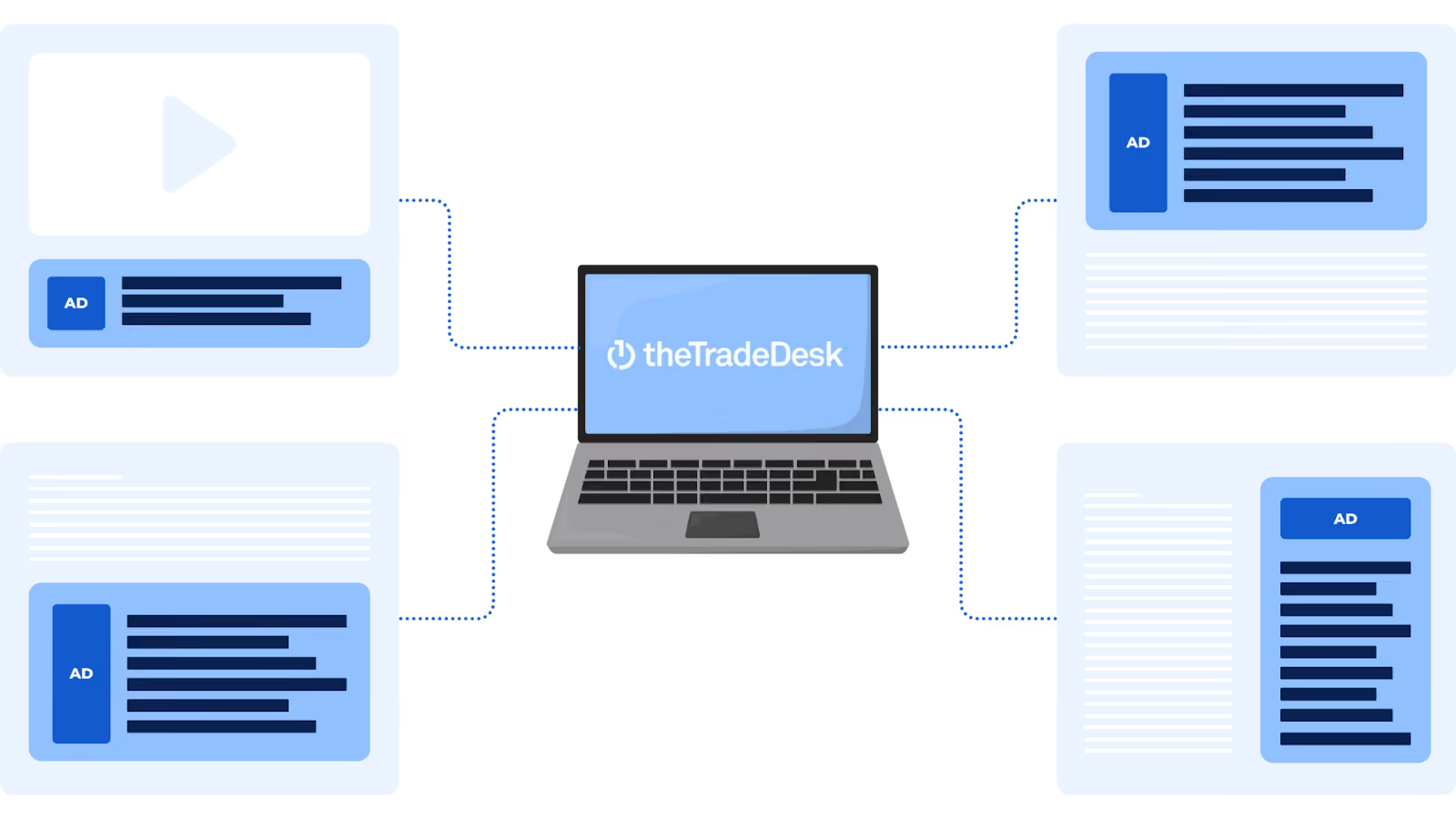
Display advertising refers to paid visual ads delivered across websites, mobile apps, connected devices, and digital environments. These ads can include static images, rich media, dynamic creative, HTML5 units, and interactive formats that appear across publisher networks and exchanges.
Historically associated with standard banner ads, display advertising has evolved into a programmatic ecosystem powered by audience data, contextual intelligence, real-time bidding, and cross-device identity resolution.
Today, display serves three critical strategic functions:
- Awareness at scale across premium and long-tail inventory
- Precision targeting based on behavioral, demographic, and contextual signals
- Performance optimization through continuous data feedback loops
When executed programmatically (particularly through enterprise-grade DSPs like The Trade Desk) display becomes a highly measurable, highly controllable growth channel that spans upper-funnel storytelling and lower-funnel conversion.
2. Benefits of Display as a Channel
Scalable Reach Across the Open Internet - Unlike social platforms confined to walled gardens, display provides access to the broader open web - premium publishers, niche vertical sites, news outlets, lifestyle content hubs, and emerging digital environments.
This reach allows brands and agencies to:
- Expand beyond owned or rented audiences
- Capture net-new prospects
- Control frequency across diverse environments
In a world where audience growth requires diversification, display ensures reach is not limited to a single platform ecosystem.
Precision Targeting and Data Activation - Modern display leverages:
- First-party CRM data
- Third-party audience segments
- Contextual targeting
- Lookalike modeling
- Behavioral intent signals
This flexibility enables marketers to build layered audience strategies that balance scale with relevance.
As third-party cookies phase out, identity solutions and UID frameworks (such as those supported by The Trade Desk) allow advertisers to future-proof targeting while maintaining compliance and transparency.
Full-Funnel Versatility - Display is uniquely adaptable across the funnel:
- Upper Funnel: Brand storytelling, product launches, awareness building
- Mid Funnel: Consideration messaging, competitor conquesting
- Lower Funnel: Retargeting, cart abandonment recovery, lead generation
Unlike siloed channels, display can support every stage of the consumer journey within a unified buying platform.
Cost Efficiency and Measurability - Display often delivers competitive CPMs relative to premium video or social placements. Combined with real-time optimization and performance tracking, it offers measurable ROI with strong control over budget pacing and allocation. Advanced DSPs enable:
- Frequency caps
- Audience suppression
- Bid shading
- Dynamic creative optimization
The result: less wasted spend and greater return per impression.
3. Examples of Display Advertising
Display advertising encompasses a broad range of formats and placements.
- Standard Banner Ads: Common sizes such as 300x250, 728x90, and 160x600 appear across desktop and mobile websites. While foundational, these placements are now optimized with dynamic messaging and audience segmentation.
- Rich Media & Interactive Ads: Expandable units, animated creatives, gamified experiences, and embedded video placements increase engagement rates and dwell time.
- Native Display: Ads that match the look and feel of publisher content (often labeled as “sponsored”) provide higher engagement and stronger contextual alignment.
- Retargeting Ads: Dynamic display ads that showcase products users previously viewed or added to cart, personalized in real time.
- Programmatic Guaranteed & PMP Placements: Premium display inventory secured through private marketplace deals, offering brand safety and quality control.
Display today is less about static banners and more about adaptable, intelligent placements designed to align with context, user intent, and stage of journey.
4. Use Cases for Display Advertising
Display excels when integrated strategically. Key use cases include:
- Brand Launch & Market Expansion: For emerging brands entering new geographies or verticals, display delivers rapid reach and awareness beyond owned audiences. Layering demographic and contextual targeting ensures relevance at scale
- Retargeting and Conversion Acceleration: Display remains one of the most effective retargeting channels. By dynamically serving personalized product messaging to users who have engaged with a brand site, marketers can increase conversion rates while minimizing acquisition costs.
- Competitive Conquesting: Through audience modeling and contextual targeting, brands can target consumers engaging with competitor-related content - intercepting consideration before purchase decisions are finalized.
- Lead Generation: Display supports gated content downloads, webinar registrations, financial service inquiries, and B2B acquisition through layered audience targeting and conversion optimization.
- Always-On Performance Infrastructure: Rather than running display in bursts, sophisticated brands deploy it as an always-on acquisition engine - fueling prospecting, retargeting, and audience expansion in tandem.
- B2B Objectives: In complex buying cycles, business-to-business display advertising supports ABM strategies. By targeting specific company IPs, job titles, industry, and intent segments, brands can influence target decision-makers.
5. How Mogl Drives Strategy, Execution, and Scale Through The Trade Desk
Display performance isn’t driven by inventory alone - it’s powered by strategy, data, creative alignment, and disciplined optimization.
Built on The Trade Desk, Mogl operates display as an integrated growth system.
- Strategic Audience Architecture: We build precision audience frameworks using first-party data, CRM segmentation, lookalike modeling, and contextual and intent layering - aligning every campaign to clear business outcomes, from acquisition to market penetration.
- Creative as a Performance Driver: Creative is treated as a performance variable, not static inventory. We deploy funnel-based messaging, dynamic creative optimization (DCO), structured A/B testing, and personalized retargeting to improve engagement and conversion rates.
- Advanced Execution & Continuous Optimization: Through The Trade Desk, we activate premium open internet inventory and PMP deals with advanced bidding, cross-device identity resolution, and real-time optimization controls.
Ongoing performance data informs frequency management, audience suppression, budget reallocation, and strategic scaling - ensuring efficiency improves as campaigns grow.
The result: measurable, scalable display performance aligned to both brand and revenue KPIs.

Display as a Strategic Growth Engine
Display advertising is no longer the digital afterthought it once was. In a fragmented media landscape dominated by privacy shifts and platform volatility, display provides diversified reach, data flexibility, and measurable control.
When powered by advanced DSP technology like The Trade Desk, and executed through a strategic partner like Mogl, display transforms from banner inventory into a scalable performance engine.
Get in touch with our team to get started.


Get this resource in your inbox
Enter your name and email address to access this resource.


