DOOH
Programmatic
Blogs
The Growth Engine Series: Digital Out-of-Home Advertising


For years, marketers saw out-of-home as an old-school awareness channel: static, broad, and hard to measure. But that view is now outdated. Digital out-of-home (DOOH) has become one of the most dynamic, data-driven, and high-performing parts of today’s media landscape.
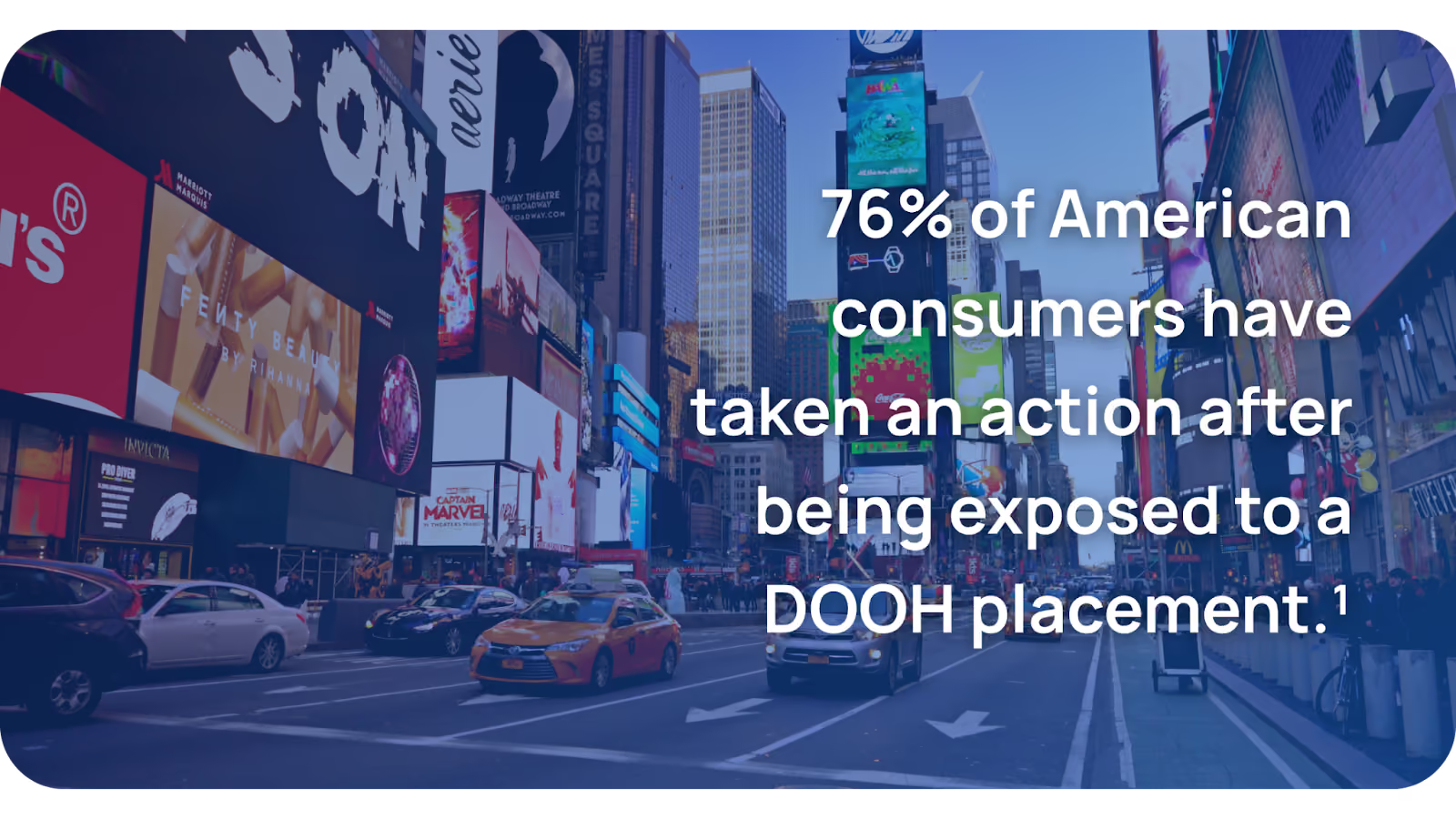
Research by the Out of Home Advertising Association of America (OAAA) found that 76% of American consumers have taken an action after being exposed to a DOOH placement.¹ It brings together the reach and cultural impact of traditional OOH with the flexibility, targeting, and accountability of digital media.
What Is Digital Out-of-Home?
At its core, DOOH means advertising shown on digital screens in public places like city centers, transit stations, stores, office buildings, airports, billboards, gyms, and more. Unlike printed billboards, DOOH is dynamic. Ads can rotate, update instantly, respond to things like weather or time of day, and use audience data.
But understanding digital out-of-home is about more than just the screens themselves. DOOH is:
- Context-aware
- Data-enabled
- Increasingly programmatic
- Measurable across the consumer journey
It connects the physical and digital worlds in ways that few other channels can match.
The Infrastructure Shift: From Static Screens to Programmatic Systems
The biggest change in DOOH advertising isn’t how it looks, but how it works behind the scenes. Programmatic DOOH has transformed screens into connected, biddable inventory - bought, optimized, and measured with the same precision as display and video. Platforms like The Trade Desk make it easy for advertisers to activate, manage, and analyze DOOH within a fully integrated omnichannel strategy.
This shift enables:
- Real-time bidding environments
- Daypart and audience-based targeting
- Dynamic creative optimization
- Trigger-based messaging (weather, traffic, live events)
- Cross-channel retargeting integrations
In short, programmatic DOOH changes it from a fixed placement to a flexible tool for driving results. Several structural forces are accelerating adoption:
- The Return of Physical Mobility: As people return to normal routines and commuting, brands are seeing again how powerful high-visibility locations can be.
- The Fragmentation of Attention: Consumers are increasingly unreachable through traditional linear channels. Digital out-of-home captures audiences in moments of physical presence - unskippable, viewable, and brand-safe.
- Privacy-Forward Targeting: With signal loss impacting digital platforms lose some tracking abilities, DOOH lets brands target by context and location without needing third-party cookies.
DOOH now works smoothly with mobile, connected TV, paid social, and retail media, helping brands reach more people and strengthen their message across channels.
Beyond Awareness: DOOH as a Performance Multiplier
A common myth about DOOH is that it only works for brand awareness. That idea is out of date. When paired with mobile location data and cross-device measurement, programmatic digital out-of-home can drive:
- Store visitation lift
- Mobile engagement spikes
- Search volume increases
- App downloads
- e-Commerce traffic
DOOH often functions as a demand accelerator. It amplifies other channels, increases brand recall, and improves downstream conversion efficiency. This means DOOH shouldn’t be stuck in a separate awareness budget. It should be part of growth planning.
How Leading Brands Are Activating DOOH
To understand the power of DOOH, it helps to look at how forward-thinking brands are applying it in the real world.
- Retail: Driving Store Traffic with Real-Time Offers: A national retailer activates programmatic DOOH screens within a one-mile radius of store locations. Creative dynamically updates with time-sensitive promotions and inventory-driven messaging. Mobile retargeting follows exposed audiences, resulting in measurable lift in foot traffic and same-week sales.
- QSR: Weather-Triggered Messaging: A quick-service restaurant chain leverages DOOH to trigger hot beverage ads during cold-weather spikes and cold drink promotions during heatwaves. The contextual relevance increases engagement and shortens the path to purchase.
- Entertainment: Cultural Takeovers: Streaming platforms deploy high-impact digital out-of-home in transit hubs and city centers during premieres. Coordinated with paid social and influencer amplification, DOOH acts as the physical-world anchor that drives search spikes and social conversation.
- CPG: Omnichannel Amplification: Consumer brands use DOOH to reinforce national campaigns, aligning creative across CTV, mobile, and digital out-of-home for consistent reach. Exposure in high-dwell environments boosts recall and improves downstream performance metrics across digital channels.
The Future: A Fully Connected Physical Media Layer
DOOH is becoming a real-time, data-driven media layer built into cities and everyday spaces. Mogl partners with brands to transform digital out-of-home from a media line item into a performance channel. Through premium inventory on The Trade Desk, data-driven planning, and omnichannel integration, Mogl ensures campaigns are not only seen - but measured, optimized, and aligned to business outcomes.
Get in touch with our team to get started.
Sources:
- Out of Home Advertising Association of America (2025)


Get this resource in your inbox
Enter your name and email address to access this resource.